
Most leadership teams spend months defining who they are.
They clarify their vision, establish core values and (hopefully) articulate a brand promise. They debate messaging, positioning and customer experience because they understand their brand influences every interaction they have with employees and customers. We support this!
But then, they move into a new office, renovate an existing one or decide it’s time for a refresh.
Somewhere along the way, all that strategic thinking gets reduced to paint colors, wall graphics and a logo in the lobby.
We’ll say this gently: That’s not environmental branding.
Environmental branding is the physical expression of your brand strategy. It ensures the mission, values and brand promise you’ve worked so hard to define are experienced the moment someone walks through your front door.
Done well, it reinforces your culture and strengthens customer confidence. Plus, it reminds employees why they chose to work for your organization in the first place. Done poorly, it’s a missed opportunity to bring your brand to life. Worse, it can work against you by telling people the opposite of what you want them to think.
Your workplace is part of your brand experience.
Most companies think about brand experience in terms of marketing: It’s the website, the sales presentation, customer service, etc. And yes, those pieces are vital, which is why we’ve dedicated our professional lives to helping companies achieve success in them. But for many organizations, the office is the only place where people experience the company in person.
Think about everyone who walks through your doors:
- A prospective employee deciding whether this feels like somewhere they want to build a career.
- A customer visiting for an important meeting.
- A board member or investor evaluating the organization behind the numbers.
- A longtime employee who’s spent years helping build the business.
Every one of them is forming impressions before anyone starts the meeting. Things like: Does this company feel innovative? Established? Collaborative? Confident? Purpose-driven? (Or any other concepts you’ve decided you want your brand to stand for.) Those impressions happen in a split second. And while they don’t replace good leadership or strong products, they do shape how people interpret everything that follows. Environmental branding matters because it reinforces what people already know about your company, or what you want them to know, tangibly and visibly.
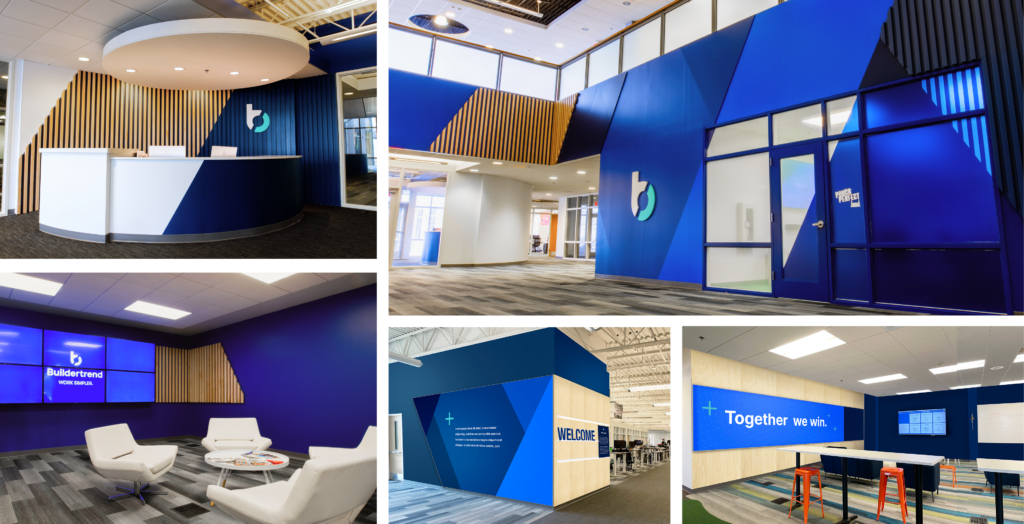
Example 1: Buildertrend already had a strong, recognizable brand. Rather than transforming every square foot, we identified the moments that mattered most and focused the investment there. The result was intentional, practical and aligned with the company’s priorities.
Your brand shouldn’t stop at the marketing department.
Mission statements shouldn’t live only in an employee handbook, just as core values shouldn’t exist only on your website.
- If collaboration is one of your values, how does your workplace encourage it?
- If transparency defines your leadership philosophy, does the environment reflect openness?
- If craftsmanship is central to your brand, do the details throughout your office demonstrate the same level of care?
Research from Gensler’s Global Workplace Survey shows employees in high-performing workplaces report stronger engagement, greater innovation and higher workplace satisfaction than those in less effective environments.
That doesn’t mean office design creates culture. But the physical environment either supports the culture you’re building or works against it.
The best approach begins with the same questions that shape every successful brand:
- Who are we?
- What do we stand for?
- What experience do we want people to have?
- How should people feel when they interact with us?
Once those answers are clear, the workplace becomes another way to communicate them.
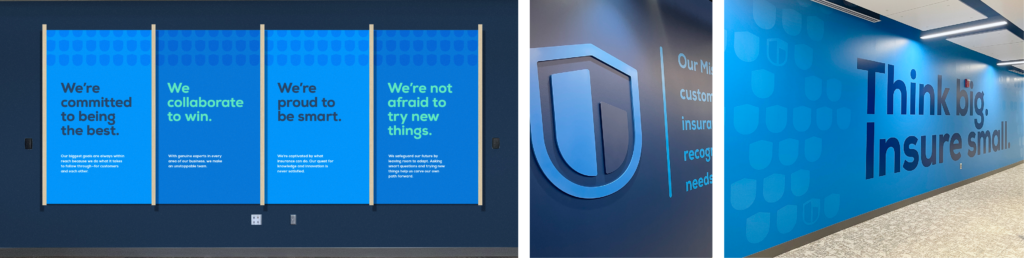
Example 2: For biBerk, the opportunity centered around a milestone. As the company celebrated an anniversary and introduced updated values, the workplace became part of that story. Employees encountered reminders of the company’s evolution throughout the office, extending the impact well beyond launch day.
Without that strategic foundation, environmental branding often becomes a collection of logos, inspirational quotes and oversized mission statements. It may look branded, but it doesn’t help people better understand who the company is.
The best time to think about your office space is earlier than you think.
If you’re planning a new office, renovation or expansion, that’s the ideal time to bring environmental branding into the conversation.
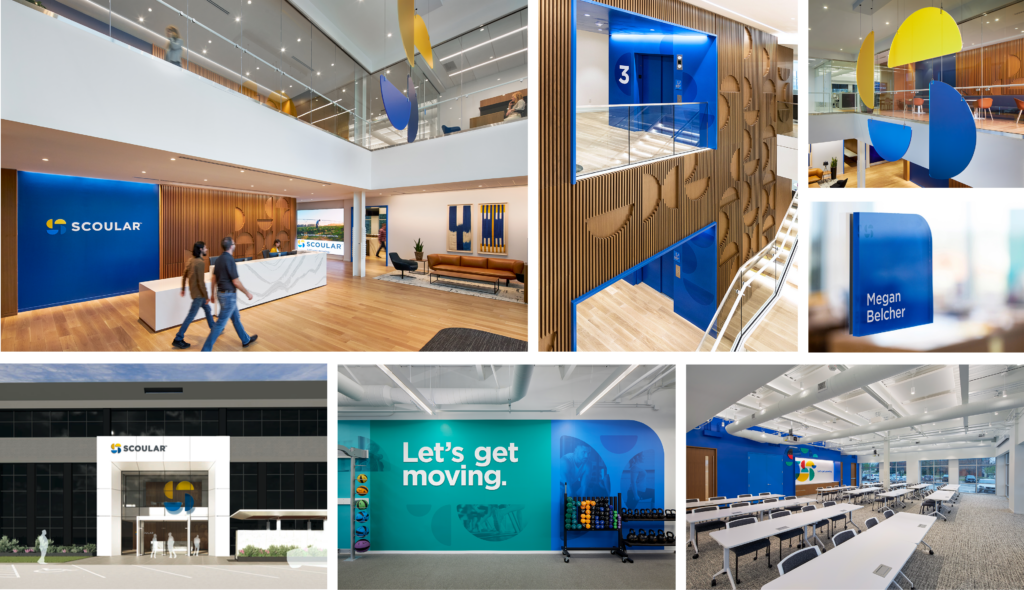
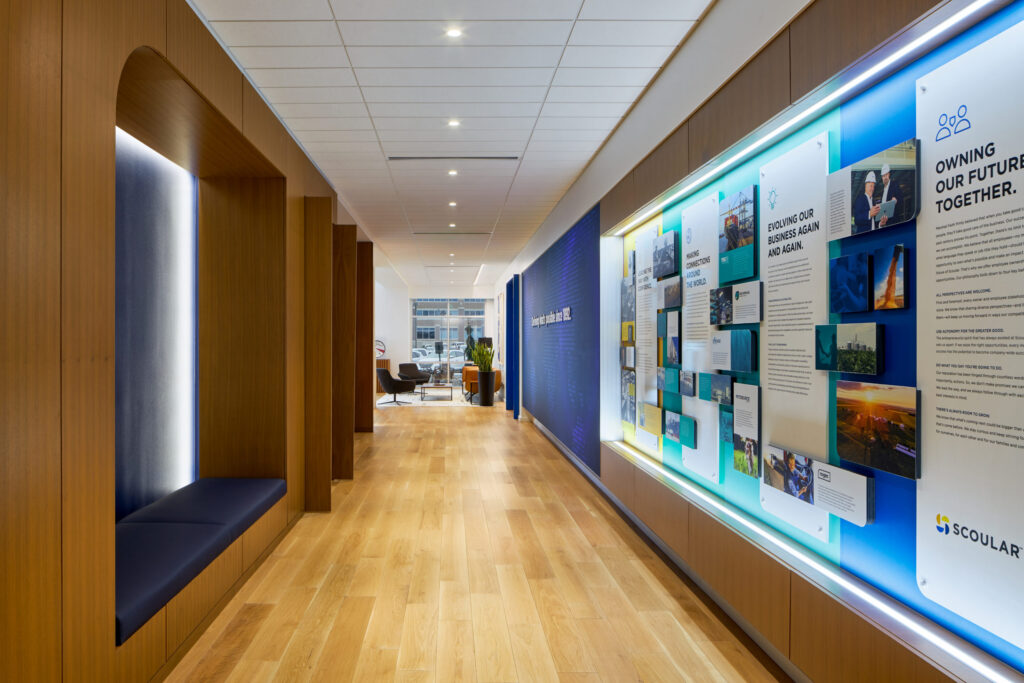
Example 3: Following a brand refresh and headquarters relocation, Scoular had the opportunity to build its updated identity directly into the new workplace. Working alongside the architectural team, we incorporated storytelling, employee messaging and visual expressions of the brand throughout the building so the physical environment reflected where the organization was headed.
Many branded elements can be integrated into the project while walls are being built, finishes are being selected and spaces are being designed. That’s typically more efficient than adding them after construction is complete.
But you don’t need a major capital project to make meaningful progress.
Some companies begin with customer-facing spaces. Others update recruiting areas, collaboration zones or executive briefing rooms. The right approach depends on where your company is today and what you’re trying to accomplish next. Your branding partner can help you determine where you can make the biggest impact with any size investment.
Your physical location(s) should tell the same story as the rest of your business.
If you’ve invested in defining your mission, vision, values and brand promise, your physical environment should be one of the strongest expressions of that work, not an afterthought.
Because your office isn’t separate from your brand. It’s one of the few places people get to experience it firsthand.
Ready to transform your physical environment? Contact us to explore how environmental brand design can transform your workplace into a more meaningful brand experience.