
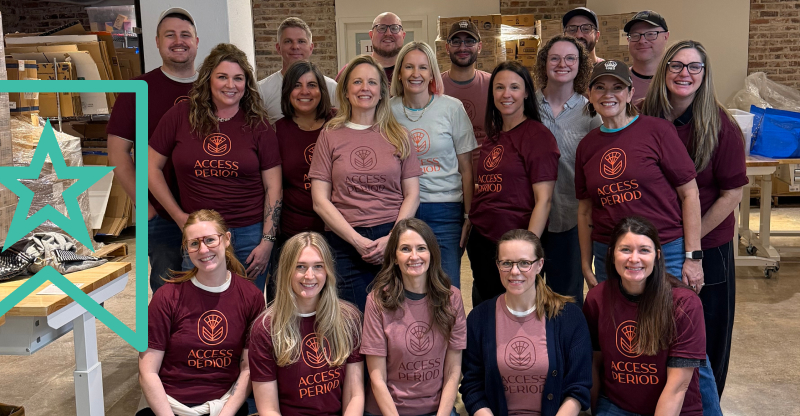
Over the years, we’ve learned something about ourselves as a team: competition can be a great motivator. Adding a challenge element to team activities gives everyone an extra objective to rally around — we’re in it together, but we’re also trying to be our individual best. It’s one of the biggest ways we live out our “make it fun” core value.
At our spring 2026 all-hands gathering — part of the quarterly meeting tradition that keeps our remote and local teams aligned — that spirit showed up everywhere, from volunteer work to trivia to team outings. Things that might look like a game on the surface actually play a bigger role in how we build trust and work better together.
Here are three ways competition helped make that happen.
1. It turned giving back into a shared goal.
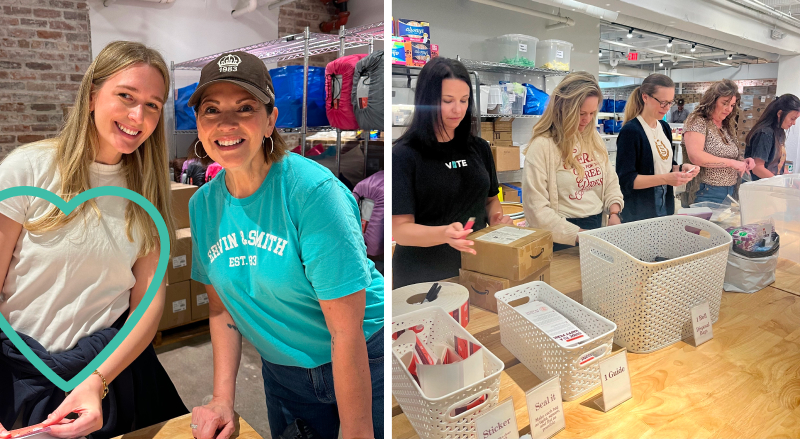
We kicked off our spring all-hands meeting by volunteering with Access Period, an Omaha nonprofit dedicated to ending period poverty.
In just a couple of hours, we packed over 200 three-month supply kits for people across Nebraska.
Yes, it was meaningful work. But it also tapped into something deeper for our team. There’s a natural buzz that comes from working together toward something tangible, especially when you can measure progress in real time.
Assembling the kits helped us practice delegating tasks and partnering up to solve problems. It also allowed us to chat about our lives outside of work while we kept busy. Everyone left feeling a greater sense of connection.
2. It brought people out of their shells.
Later that day, we put our knowledge to the test with a 100-question pop culture trivia happy hour.
From music to movies to sports, the questions covered a little bit of everything. As we submitted our answers and watched the leaderboard shift in real time, we saw new sides of each other’s interests and strengths. Hidden expertise came out of nowhere. Teams rallied behind unlikely MVPs.
Moments like this aren’t just fun; they create new connections. You learn who knows the name of Olivia Rodrigo’s first album (was it “Sour” or “Guts”?) or who knows whether Lionel Messi or Cristiano Ronaldo has a bigger following online (it’s Ronaldo). But more importantly, you see your coworkers in a different light.
When people feel seen and valued beyond their job title, it builds confidence… and trust follows.
3. It strengthened team identity.
Earlier in the week, each team headed out for their own outing. So, naturally, we got competitive about which team had the best plans.
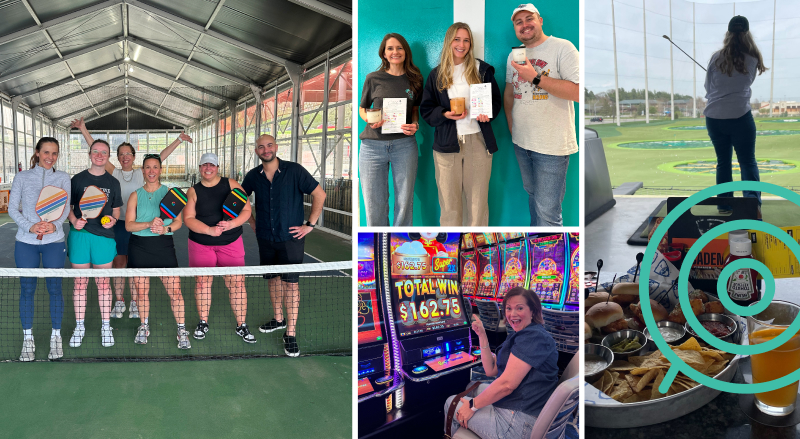
The creative team hit Topgolf. Media tried their hand at candle-making before dinner with a vendor partner. Client service brought their energy to the pickleball courts. Operations tested their luck (and strategy) at the casino.
What stood out wasn’t just what each team did, but how they showed up for each other.
“It was great spending in-person time with the remote media team and unplugging together.” — Ryan S.
“I enjoyed seeing my operations team’s different roulette strategies and watching everyone tackle challenges in a new environment.” — Connie B.
“Nothing brought out the creative team’s competitive side faster than golf, bad swings and a camera rolling.” — Hannah H.
“Pickleball brought out everyone’s competitive side, and spending time together outside the office made it even better.” — Abbie P.
These moments reinforce team identity. They create shared experiences, inside jokes and a sense of camaraderie that carries back into the work.
Moving forward with confidence in each other.
At the end of the week, we wrapped things up the way we always do. Our Friday kudos meeting gave everyone a platform to recognize wins and celebrate each other.
But what stuck with us most wasn’t just what we accomplished. It was how we did it while pushing each other to be our best selves — or as our core values state, “be really good” and “make it fun.”